

The craft
Dabu and indigo: the mud-resist print of Bagru
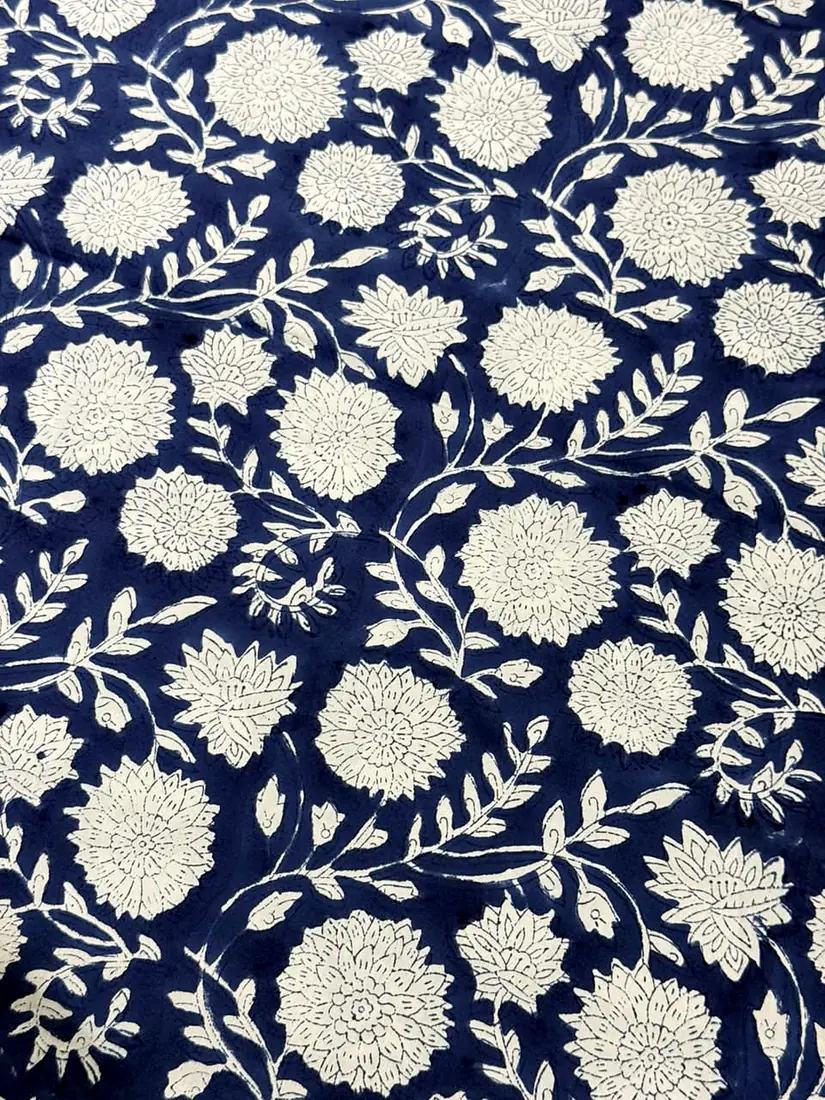
Dabu is one of the oldest ways of printing cloth in Rajasthan. Instead of stamping colour onto the cotton, the printer stamps a paste that keeps colour out. What stays white is the pattern.
How a dabu print is made
- A carved wooden block is dipped in dabu, a thick paste traditionally made from local clay, gum, wheat husk and lime.
- The block is pressed onto the cotton. Sawdust is often sprinkled on top so the wet paste holds.
- Once dry, the cloth is dipped into an indigo vat. The dye cannot reach the parts covered in mud.
- The cloth is washed, the mud falls away, and the pattern shows through in the colour of the base cloth.
Why indigo and dabu go together
Indigo builds colour in layers, so a cloth can be dipped several times for a deeper blue. Some prints are resisted again between dips, which gives two or three shades of blue in one design.
How to recognise dabu on a bedsheet
- The white outlines are slightly soft or crackled, where the dry mud cracked in the vat.
- The pattern is usually light on a deep ground, the reverse of most block prints.
- No two repeats are exactly alike.
Caring for indigo prints
Indigo can release a little colour in the first few washes. Wash it separately in cold water and dry it in the shade. Read our full care guide for the details.